
Most people open their astrocartography map and feel immediately overwhelmed.
Lines everywhere. Symbols they don’t recognize. No clear place to begin.
But your map isn’t confusing. It’s precise. You just haven’t been shown how to read it yet.
Because an astrocartography map isn’t just a collection of lines across the world.
It’s a system—one that shows you where different parts of your life become activated depending on where you are.
You’re not just looking at locations. You’re looking at your identity, your relationships, your visibility, your inner world—shifting across geography.
And once you understand how to read it, you stop guessing—and start choosing with intention. You don’t need to understand everything. You just need to know where to start.
Step 1 — Find Your Lines
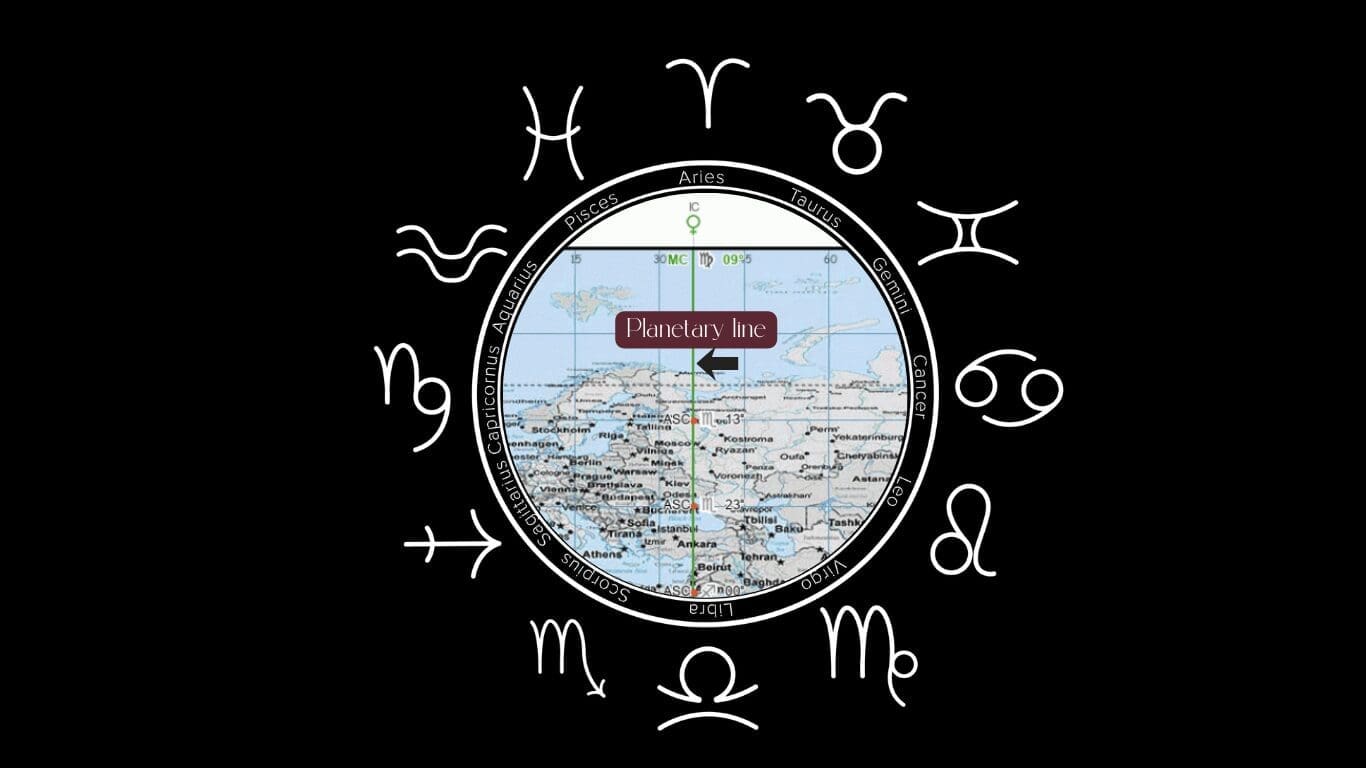
Your astrocartography map is made up of lines running across the world.
Each line represents a planet from your birth chart becoming activated in a specific location.
You’ll usually see labels like:
- AC (Ascendant)
- MC (Midheaven)
- DC (Descendant)
- IC (Imum Coeli)
Don’t overcomplicate this.
For now, just focus on:
- where the lines are
- and which planet is attached to each one
👉 Want a deeper breakdown of angles? Read: Planetary Lines Explained
Step 2 — Understand the Planet
The planet tells you what kind of experience you’ll have in that place. This is where meaning begins.
For example:
- Venus → love, beauty, connection
- Mars → action, drive, intensity
- Jupiter → growth, expansion, opportunity
- Saturn → responsibility, structure, pressure
You’re not just looking at a line. You’re looking at a specific energy being activated in a specific place.
👉 For a full breakdown of each planet, read: Planetary Lines Explained
Step 3 — Understand the Angle (AC / MC / DC / IC)
The angle tells you where in your life that energy shows up.
Same planet—completely different experience depending on the angle.
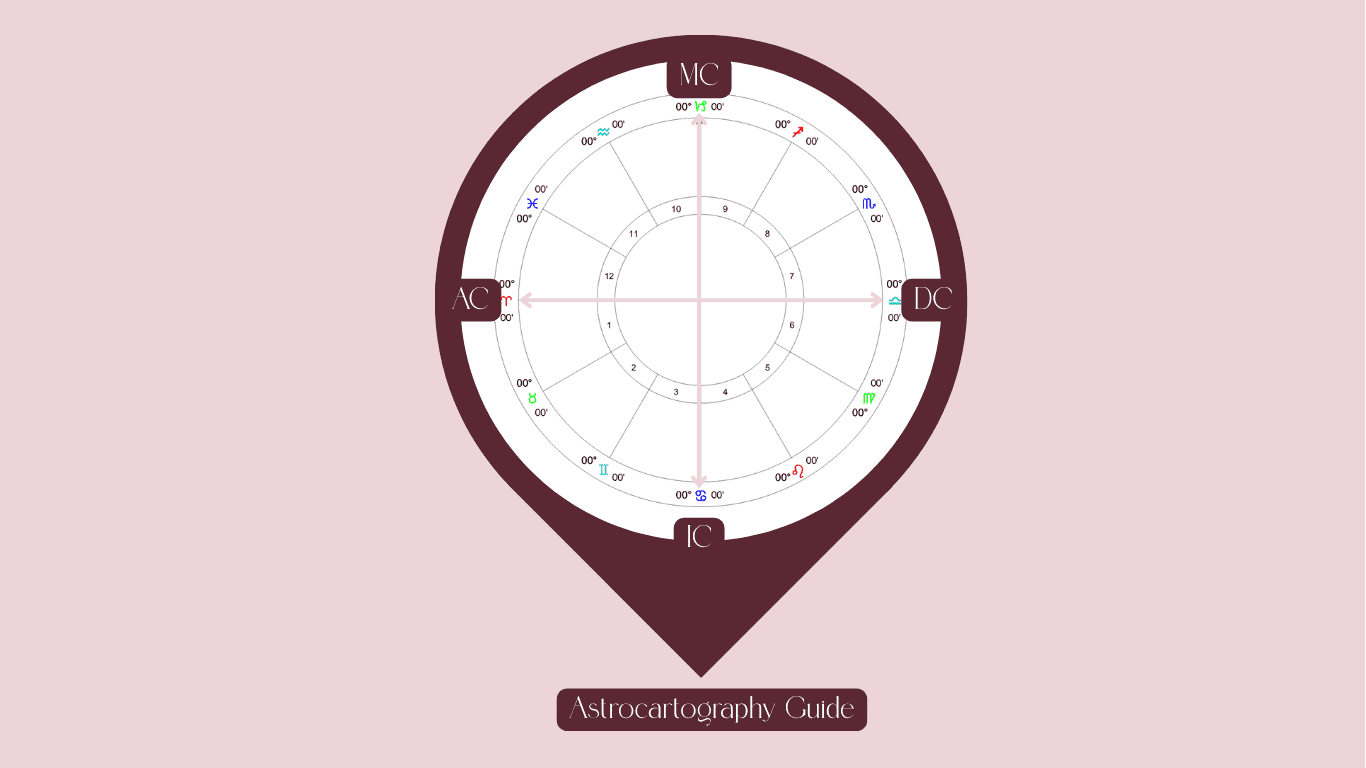
- AC (Ascendant) → identity, self, how you show up
- MC (Midheaven) → career, visibility, reputation
- DC (Descendant) → relationships, other people
- IC (Imum Coeli) → home, emotional world, inner life
Example:
A Venus line alone isn’t enough information.
- Venus MC → you’re seen, admired, visible
- Venus IC → love feels private, emotional, internal
This is where your map starts becoming real.
Step 4 — How Close You Are Matters
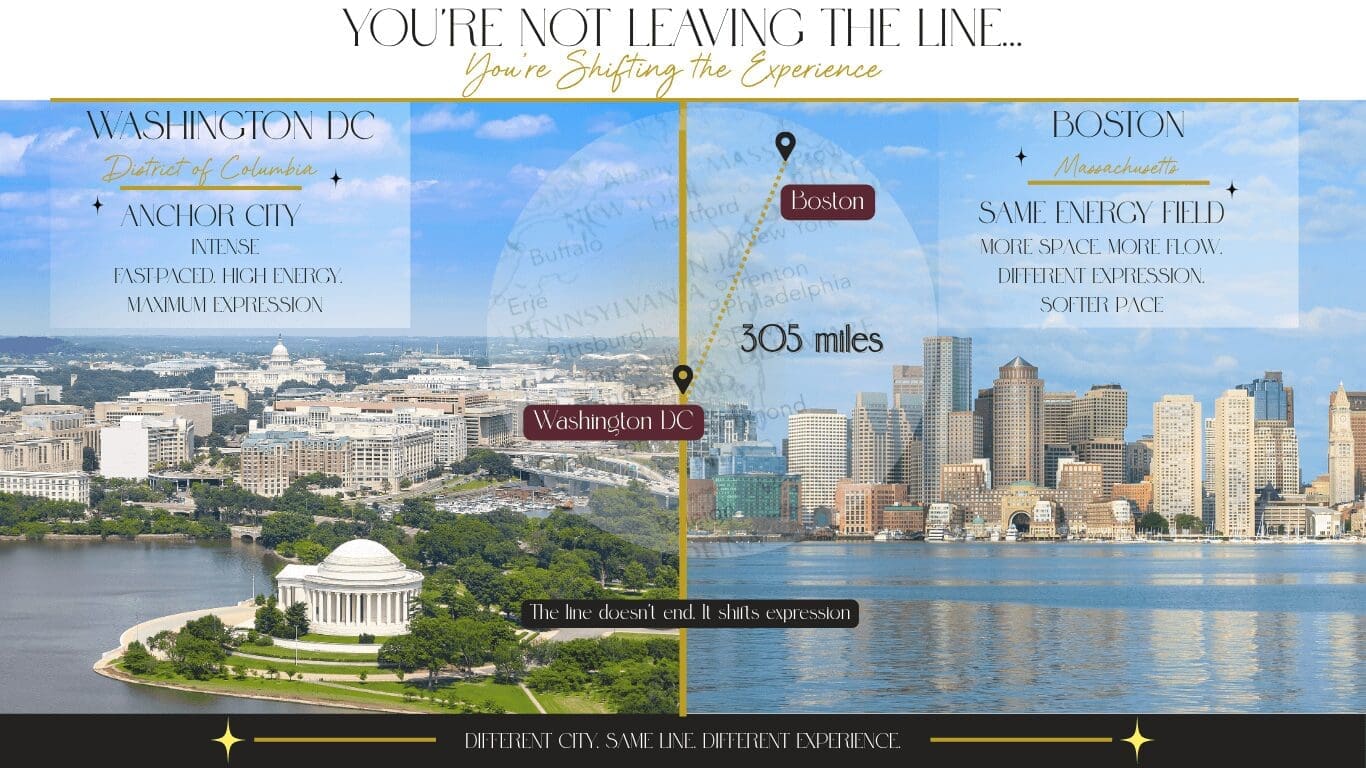
You don’t have to live directly on a line to feel it. The closer you are, the stronger the experience. Even if you’re not exactly on the line, the energy can still be active in the surrounding area.
👉 Want to understand this in detail? Read: How Far Astrocartography Lines Work
Step 5 — Choose Based on Your Goal
Once you understand the planet and the angle, the next step is choosing intentionally. Because not every place is meant for the same version of you. Your astrocartography map isn’t about finding the “best” location. It’s about finding the location that aligns with what you’re currently building.
If you want visibility and recognition → look at your Sun or MC lines
If you want love, connection, or ease → Venus lines
If you want growth and expansion → Jupiter lines
If you need structure or long-term stability → Saturn lines
This is where your map becomes personal. You’re not just reading symbols—you’re deciding what kind of life you want to step into, and choosing a place that supports that version of you.
What Most People Don’t Know About Astrocartography
Reading your map is the first layer. But astrocartography goes deeper than just lines on a map. Your natal chart changes how every line feels.

Some places are intensified by crossing energies, known as parans. And your relocated chart shows how your life actually restructures when you move. This is why two people can go to the same place and have completely different experiences.
Your map is personal—and the deeper you go, the more precise it becomes.
If you want to go deeper:
→ Learn how far lines actually work: How Far Astrocartography Lines Work
→ Understand why some places feel more intense: What is a Paran in Astrocartography
→ See how your chart shifts in a new location: What is a Relocated Chart in Astrology
→ Or explore the full method: Complete Guide to Astrocartography
Reading Your Map with Intention
Your astrocartography map isn’t something you memorize. It’s something you learn to read. And once you understand what to look for, it stops feeling overwhelming—and starts becoming something you can actually use. You don’t need to understand everything to begin. You just need to start looking at your map differently.
✨Your map already knows where you’re meant to thrive— you just have to know how to read it.
Find your aligned place to live, work, and thrive.
→ Book your astrocartography reading
→ Download your free guide


