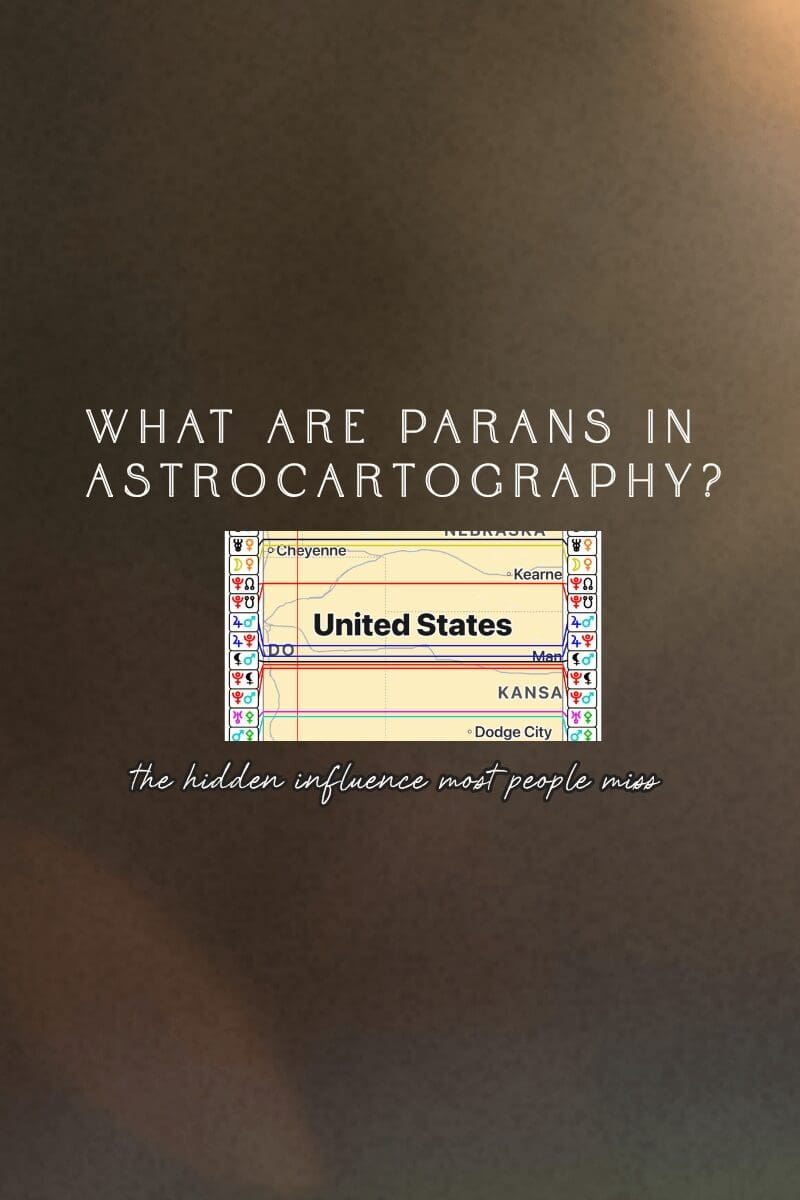
Most people learn astrocartography by looking at planetary lines across a map. But there’s another layer—quieter, more subtle, and often more telling. These are called paran lines in astrocartography. They don’t stretch across the map the same way your main lines do. They don’t announce themselves visually in the same way. And yet… they can completely change how a place feels.
What Is a Paran Line?
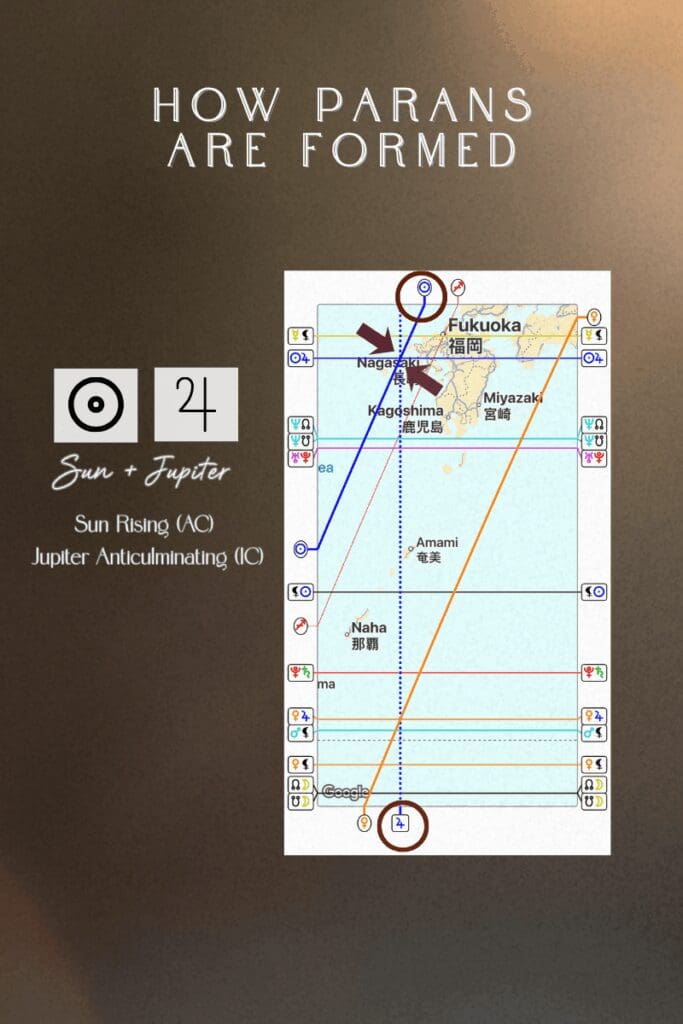
A paran line forms when two planets are angular at the same time in a specific location.
This means:
- One planet is rising, setting, culminating, or at the IC
- While another planet is doing the same… simultaneously
This creates a blended influence—a layered experience rather than a single planetary expression.
Instead of:
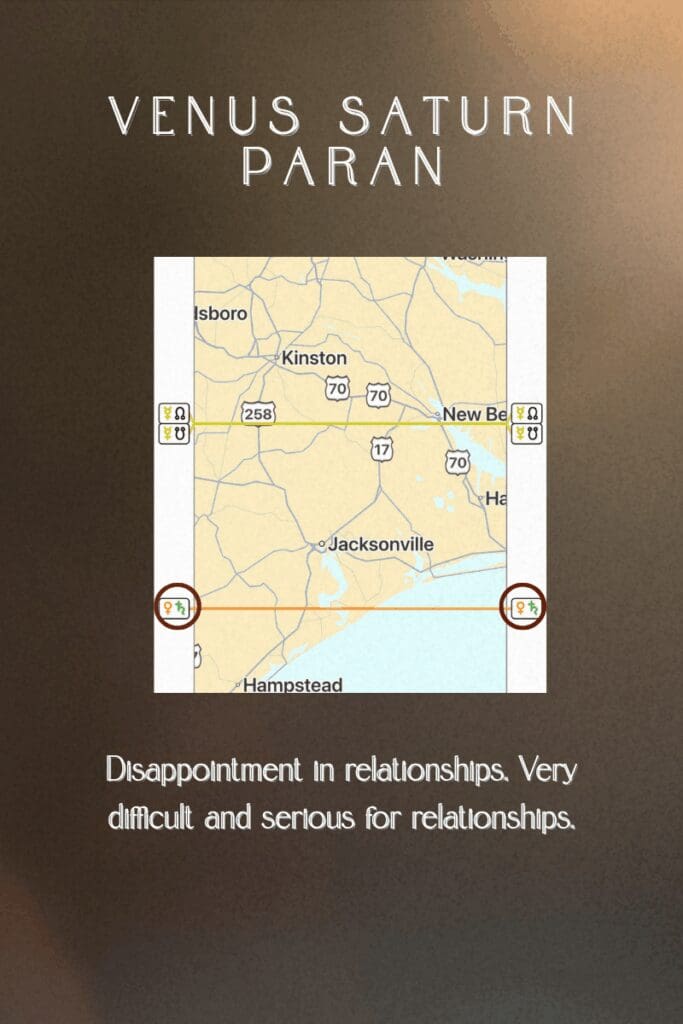
- Venus or Saturn
You experience:
- Venus and Saturn together
Not separately. Not one after the other. At the same time.
- For example, Venus + Saturn = challenges or restrictions (Saturn) with love (Venus)
Why Parans Matter in Astrocartography and Relocation
Parans aren’t just something to note, they are what fine-tune a location. This is often where you understand why a place feels off, even when no major line is directly on it, parans can quietly override what looks “good” on the surface. You’re not just choosing a city; you’re working within an energetic field.
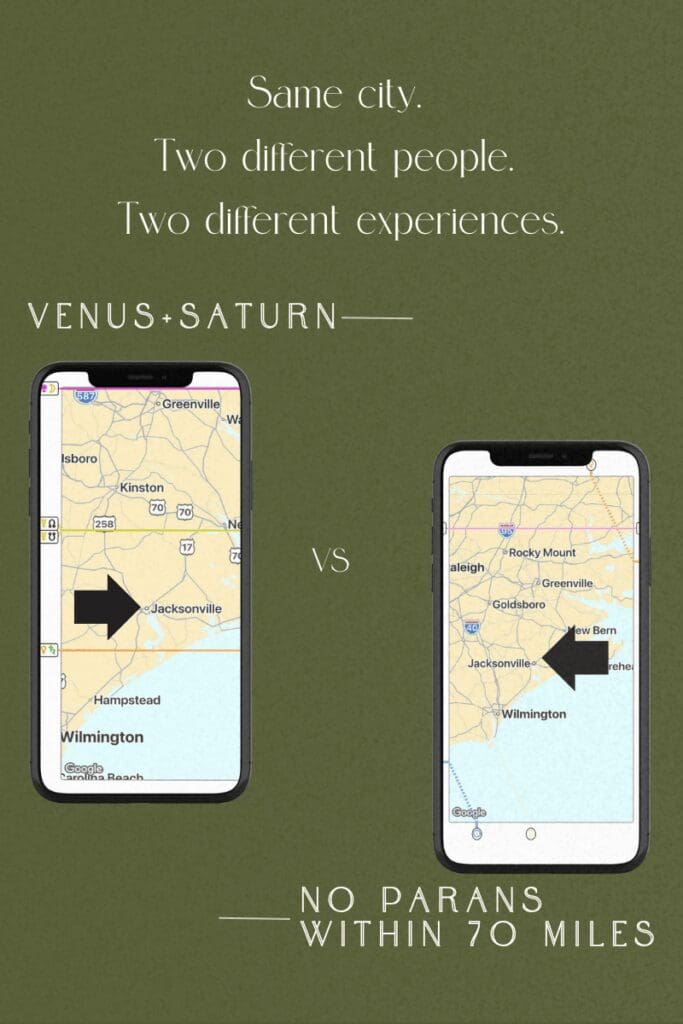
If you’ve ever looked at your map and thought, “This city should work…but it doesn’t,” this is where parans come in. Parans are one of the most effective tools for ruling places out. Not everything misaligned shows up as a major line, sometimes it’s a crossing influence within range. Because parans operate within a 70-mile radius they can influence entire regions, not just a single city. Two cities relatively close together can feel completely different.
This is where people go wrong… they choose a “good line”- but ignore the paran sitting right on top of it.
If you haven’t already, read the full breakdown of planetary lines first- because parans modify those influences, not replace them. Read here.
How to Work With Parans (Strategy)
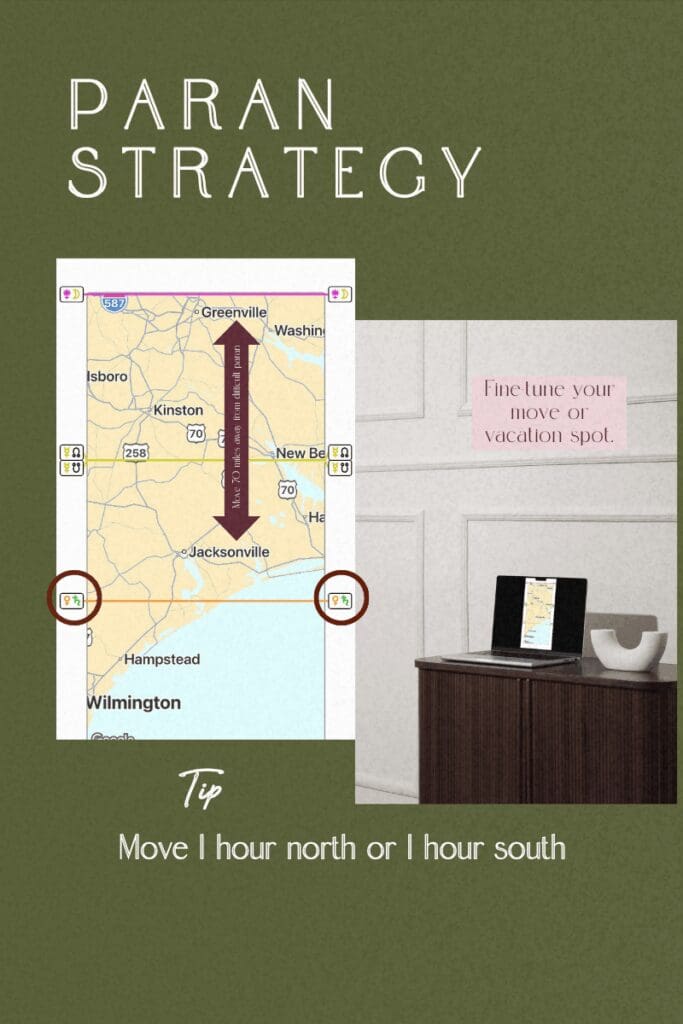
Parans are one of the most effective tools for fine-tuning a location- especially when something feels off and you can’t explain why. Because their influence can extend roughly 70 miles, small adjustments in location can completely shift your experience.
If a paran feels difficult: move slightly north or south about an hour to change the dynamic. If a paran is supportive: being within roughly 5-10 miles tends to feel the strongest.
For example, someone seeking visibility or recognition may benefit from being close to a supportive Sun-related-paran while avoiding harsher combinations that create pressure instead of growth. This is where astrocartography becomes precise not just choosing a city, but adjusting within.
Want to see how this shows up in your own map?
Download your own free astrocartography guide right here.
Why Paran Lines Feel Different
Paran lines don’t operate like your standard vertical lines.
They are:
- More localized
- Less obvious visually
- Often felt rather than immediately recognized
You may travel somewhere with no major line nearby…and still feel something significant. That “something” is often a paran. As a matter of fact, when there are no planetary lines within 600 miles, parans become the primary influence. They work beneath the surface—quietly shaping the tone of your experience. Parans don’t override your birth chart- they activate it.
How Paran Lines Show Up in Real Life
Parans create combined planetary themes.
Examples:
- Sun + Jupiter: cheerful and outgoing. expansion, faith, self confidence, success and advancement
- Venus + Moon: relationships, love, social harmony, creativity
- Mars + Saturn: Delays, difficulties , insurmountable obstacles, tiring with a sense of hopelessness
- Jupiter + Pluto: wealth line. tremendous success, power, large sums of money, overnight fame
- Mercury + Uranus: innovative and being different, good for writing and learning astrology
- Saturn + Neptune scandal, drama, public scrutinity
These are not always “good” or “bad”. They are intensifiers. They deepen the story.
Do Paran Lines Matter More Than Regular Lines?
Not more—but differently.
Planetary lines set the foundation. Parans refine and sometimes complicate the experience.
In some cases, a paran can:
- Intensify a line
- Contradict it
- Or completely shift how it feels
This is why two people can go to the same place…and walk away with completely different experiences.
Why Most People Miss Them
Most beginner maps don’t highlight paran lines clearly.
They’re often:
- Not labeled on basic maps
- Overlooked in surface-level interpretations
- Ignored in quick readings
Which is why someone might say: “I don’t have any lines there… but that place changed me”. Parans explain the experiences that don’t make sense on the surface.
Paran Lines vs Planetary Lines
Planetary Lines:
- One planet
- Strong, direct, obvious
- Easier to interpret
Paran Lines:
- Two planets interacting
- Subtle but layered
- More complex, more personal
Think of it like this:
Planetary lines are the main storyline. Parans are the underlying plot twist. The power of parans can’t be denied especially since they become the primary influence when no planetary line is in the orb of influence (600 miles). For information on the orb of influence, read here.
How to Start Noticing Paran Energy
You don’t need to memorize every combination.
Start here:
- Reflect on places that felt unexpectedly intense
- Notice mixed experiences (both good and challenging at once)
- Pay attention to emotional or energetic contrasts
Parans often show up as duality. Where something feels aligned… and challenging… at the same time.