

Some places seem to turn the volume up on your inner life. You may feel more intuitive, more reflective, more interested in meditation or symbolism—or you may find yourself going through the kind of experience that changes what you believe altogether. In astrocartography, certain planetary lines can support this type of spiritual development, but they do it in very different ways.
When I look at a map for spiritual growth, I don’t automatically search for one “perfect” spiritual line. I want to know what kind of growth the person is seeking. Do they want greater intuition? A deeper sense of faith? Emotional healing? A complete inner transformation? The answer changes which planetary lines I would examine first.
And, as always, the line itself is only part of the story. I also want to see how that planet functions in the natal chart, which angle it occupies in the relocated chart, and what else is happening nearby. A beautiful-looking line on a map can feel very different from person to person.
A planetary line may not be acting alone. Learn how parans can add another layer to a location.
1. Neptune Lines — Intuition, Mysticism and Surrender

Neptune is often the first planet people associate with spirituality. Along a Neptune line, the boundaries between the practical world and the imaginal world can feel thinner. Dreams may become more vivid. Meditation, art, music, symbolism, compassion and intuitive practices can take on greater importance.
For someone intentionally seeking a retreat, creative immersion or deeper spiritual practice, Neptune can be powerful. A Neptune Ascendant line may make the Neptunian quality feel deeply personal and embodied. Neptune on the IC can draw attention inward, toward private life, ancestry, memory and the inner sanctuary of home. Neptune on the MC can bring spiritual, artistic or compassionate themes into public life or vocation, while Neptune on the Descendant may bring idealized, spiritual or elusive relationship experiences.
But Neptune is not automatically peaceful. Its gift is permeability, and that is also its challenge. Confusion, projection, escapism and unrealistic expectations can accompany the inspiration. I would never choose a Neptune location based on the word “spiritual” alone. Clear boundaries and a grounded understanding of the natal Neptune matter.
Want to understand why the same planet feels different on the AC, DC, MC or IC? Read my guide to Planetary Lines in Astrocartography.
2. Jupiter Lines — Faith, Wisdom and Meaning
Jupiter can support spiritual growth through expansion of worldview. These places may encourage study, travel, philosophy, religion, teaching, mentorship or a renewed sense of meaning. Rather than dissolving boundaries like Neptune, Jupiter often asks you to see a larger picture.
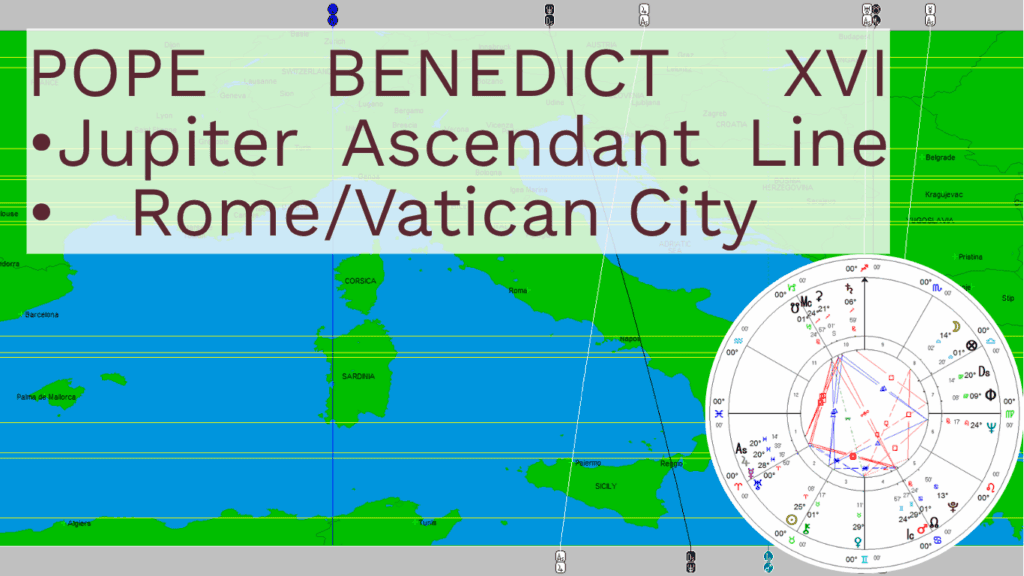
A Jupiter line can be especially compelling when your version of spiritual growth includes learning from teachers, studying a tradition, publishing or sharing wisdom, or experiencing cultures and belief systems beyond your own. Jupiter on the MC can emphasize teaching and guidance publicly; Jupiter on the IC may expand the inner or home life; Jupiter on the Ascendant can make exploration and growth feel personal; and Jupiter on the Descendant may bring teachers, guides or expansive relationships into your life.
Jupiter can amplify, however, so discernment still matters. More is not always better. A supportive Jupiter in the natal chart may express differently from a Jupiter carrying difficult natal conditions or aspects.
3. Moon Lines — Inner Knowing, Memory and Emotional Connection

The Moon is not always labeled a “spiritual” planet, yet Moon lines can be deeply important for inner work. The Moon connects us with instinct, memory, belonging, emotional rhythms, family patterns and the body’s responses. Spiritual development is not always about transcending emotion; sometimes it comes from learning to listen to it.
Moon-IC locations can be particularly inward and private, emphasizing roots, home, family and ancestral material. Moon-Ascendant locations can heighten sensitivity and make feelings more immediate. Moon-MC locations may make emotional responsiveness or caretaking more visible, while Moon-Descendant places can bring emotional lessons through other people.
If someone wants to reconnect with intuition, ancestry, ritual or their emotional life, I would absolutely look at the Moon rather than assuming Neptune is the only answer.
4. Pluto Lines — Spiritual Growth Through Transformation
Pluto is a very different kind of spiritual teacher. A Pluto lines can bring us into contact with power, shadow material, endings, regeneration and psychological depth. This is not necessarily the line I would choose for a gentle spiritual retreat—but it can correspond with profound transformation.
A Pluto location may expose what has been buried or what can no longer remain unchanged. Depending on the angle, those themes may be experienced through identity, relationships, home and family, or career and public life. For some people, this becomes the catalyst for therapy, shadow work, deep research, occult study or a complete change in how they understand themselves.
Pluto deserves respect. Intensity should not be romanticized as spiritual superiority. The natal chart and the person’s real-life circumstances need to be considered before treating a Pluto line as a destination for growth.
5. Uranus Lines — Awakening and Liberation

Uranus can create spiritual growth through awakening rather than devotion. These locations may disrupt old patterns, introduce unconventional communities or ideas, and encourage you to question assumptions that once felt permanent.
For someone whose spiritual path involves astrology, innovation, alternative practices, freedom or a radical shift in perspective, Uranus may be highly relevant. The experience can feel exhilarating, destabilizing—or both. Uranus is often less about finding certainty and more about discovering that you are capable of living differently.
Which Line Is Best for You?
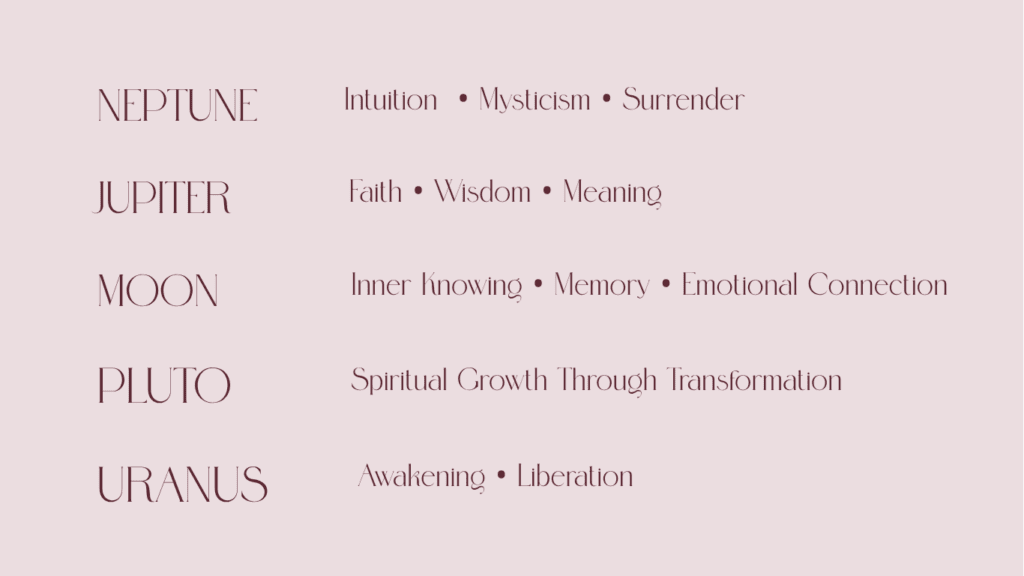
The best line depends on the experience you actually want. Neptune can heighten intuition and mysticism. Jupiter can expand faith, wisdom and worldview. The Moon can deepen emotional and ancestral connection. Pluto can transform you through shadow and regeneration. Uranus can awaken you through freedom and disruption.
I would also distinguish between visiting a line and building a life there. A location that is extraordinary for a retreat, pilgrimage or short period of study may not be the place you want to manage everyday responsibilities for years. Duration matters.
This is why I don’t read an astrocartography map in isolation. I look at the natal promise of the planet, the angular line, the relocated chart and the surrounding planetary picture. Your map can show where a theme becomes louder—but the chart helps explain how you are likely to experience it.
Not sure what you’re looking at yet? Start with my step-by-step guide to reading your astrocartography map.
Before Choosing a Spiritual Location
- Check the planet in your natal chart: sign, house, condition and major aspects.
- Identify the angle: AC, DC, MC and IC express the same planet differently.
- Review the relocated chart rather than relying on the map alone.
- Look for nearby lines, crossings and parans that may modify the experience.
- Decide whether you are choosing a place to visit, retreat, study or live long-term.
- Keep practical realities in the picture. Spiritual resonance does not replace safety, finances, health care, visas, work or community needs.
Your map is only the beginning. See why I also use the relocated chart before interpreting a place.
Final Thought
Spiritual growth does not always arrive as peace. Sometimes it looks like Neptune softening the edges of ordinary perception. Other times Jupiter opens a new philosophy. Sometimes the Moon brings you back to your roots. Pluto may ask you to shed an old identity, while Uranus wakes you up by changing the rules.
The goal is not to chase the planet that sounds the most spiritual. It is to understand which planetary experience supports the kind of growth you are ready to explore—and how that planet actually works in your chart.

Your map already knows. Let’s decode it. Explore an Astrocartography Reading to understand which locations may support your next chapter—and what your relocated chart adds to the story.
Ready to discover where your spiritual growth is supported?


