
Astrocartography for digital nomads can bring purpose to a decision that is often driven by Wi-Fi speed, cost of living, climate, or a beautiful social media feed. When you can work from almost anywhere, the real question is not simply where can I go. It is what kind of life do I want this place to support?
A destination may be excellent for professional visibility but feel restless as a home base. Another place may help you build community and settle into a healthy routine without producing immediate career momentum. That is why choosing the nearest Venus or Jupiter line is not enough. The planet matters, but so do the angle, the condition of that planet in your natal chart, the relocated chart, nearby parans, distance from the line, and your reason for going.
Begin With the Life You Need the Place to Support

Digital nomadism is not one lifestyle. A freelance writer, online coach, software developer, travel creator, and consultant may all work remotely, yet they need different things from a location. Before opening your map, choose the primary goal for the next season of your life.
- Visibility and career growth
- Focused work and reliable routines
- Clients, collaborators, and professional community
- A comfortable home base between trips
- Creativity, travel, or personal reinvention
- Rest, belonging, and emotional support
This step prevents a common mistake: treating every traditionally benefic line as ideal for every purpose. A place can be supportive and still be wrong for the goal you are prioritizing now.
New to astrocartography, read my Complete Guide to Astrocartography Relocation. Astrocartography is the astrology of place. Learn why where you live matters.
The Angle Changes How a Planet Shows Up
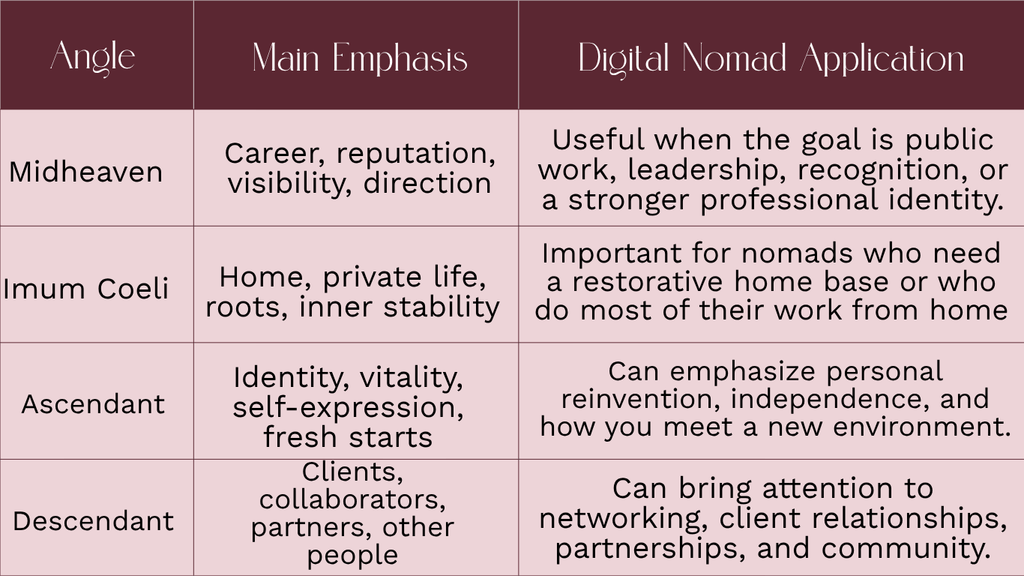
In astrocartography, a planet becomes especially prominent where it was on one of the four angles at birth. Those angles describe different areas of life, so the same planet can feel very different from one line to another.
Mercury shows the difference clearly. A Mercury MC location may emphasize communication, teaching, marketing, writing, or professional visibility. Mercury on the IC can be especially relevant for someone who works from home, because the mental activity and communication of Mercury become rooted in the private sphere. Mercury on the DSC may emphasize clients and collaborators, while Mercury on the ASC may make life feel faster, more curious, and highly mobile.
Planetary Lines to Consider for a Mobile Lifestyle
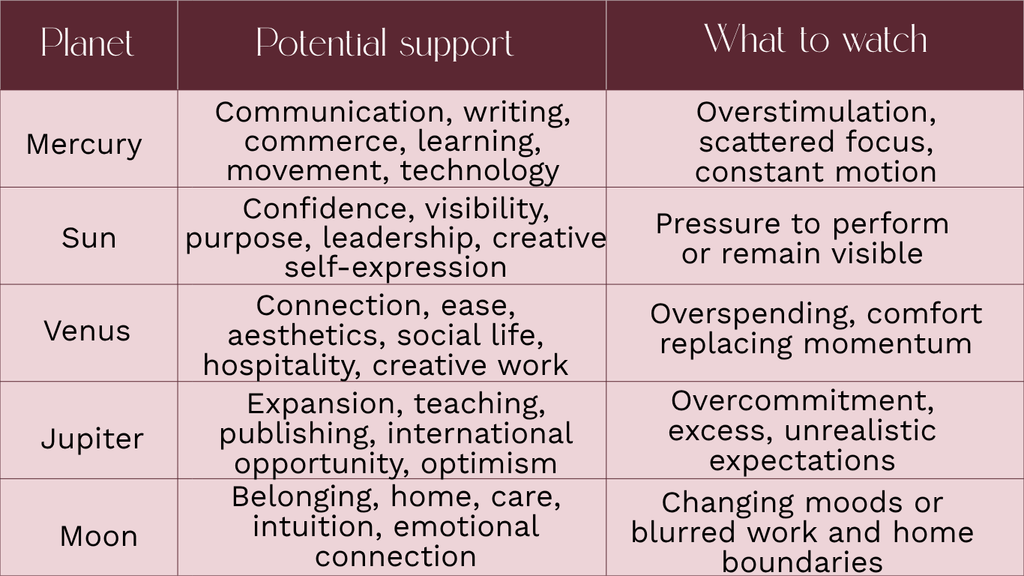
There is no universal best line for digital nomads. These planetary themes can help you develop a shortlist, but they must be interpreted through your natal chart and the angle involved.
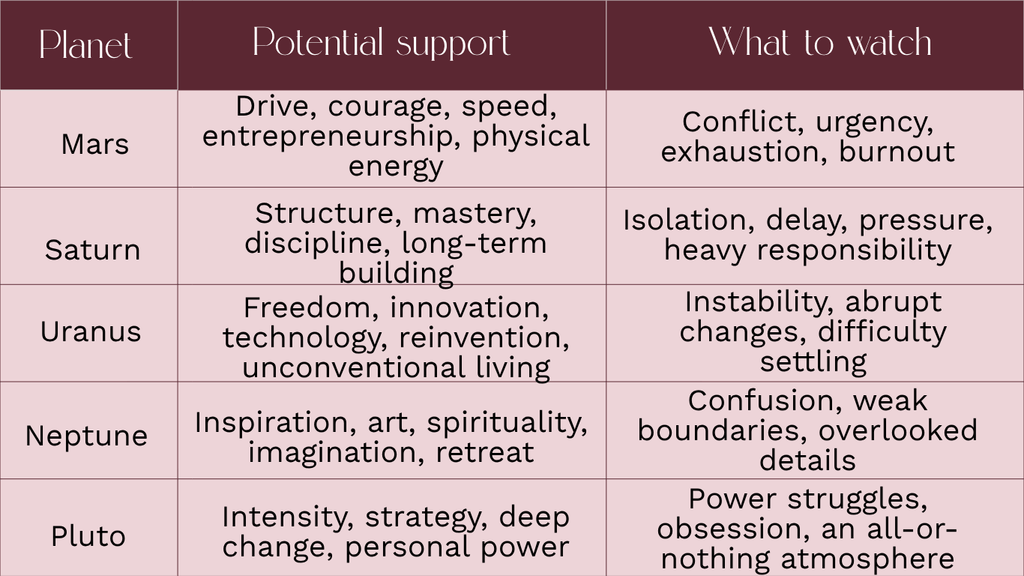
Planetary dignity and natal condition matter. A line does not erase the way a planet functions in the birth chart. Before recommending a destination, look at whether the planet is dignified or debilitated, its house rulerships and aspects, and whether its natal condition supports the person’s goal. A traditionally fortunate planet is not automatically simple, and a challenging planet is not automatically unusable.
Beyond Planetary Lines: Why Your Money and Career Houses Matter
Not all digital nomads earn their living the same way, which is why planetary lines alone don’t tell the complete story. When evaluating a destination through astrocartography, the relocated chart can reveal which areas of life receive greater emphasis, particularly the 2nd house of income and financial resources, the 6th house of daily labor and responsibilities, and the 10th house of career and professional reputation. For example, a remote employee may want to examine the 6th house for workload and daily responsibilities, while a freelancer working with international clients might focus on the 2nd house for earnings, the 7th for client relationships, and the 10th for professional development. An entrepreneur running an online business may place greater emphasis on the 2nd, 10th, and 11th houses, with the 11th traditionally associated with gains, benefactors, and supportive connections. Meanwhile, a digital nomad supported primarily by passive income may prioritize financial resources, lifestyle, and a comfortable home base over career advancement.
The important distinction is that no single house or planetary line guarantees financial success. A thorough relocation analysis considers the condition of the planets ruling these houses, their aspects, angularity, and how their placements change in the relocated chart. Combined with planetary lines and parans, this provides a more individualized perspective on whether a destination aligns with your work, financial priorities, and desired lifestyle.
Why Your Astrocartography Map Is Not Enough
The map is the beginning of the analysis, not the final answer. A careful location comparison should include several layers.
- Confirm the goal. Decide what the next location must support before ranking cities.
- Evaluate the natal planet. Review dignity, sect, rulership, aspects, and the planet’s overall role in the birth chart.
- Check the planet and angle. Translate the line into the specific life area it activates.
- Measure distance from the line. A city does not need to sit exactly on a line to feel it, and intensity changes with proximity.
- Read the relocated chart. Look at which planets become angular and whether the relocated houses support work, home, health, relationships, and finances.
- Check parans. Two planets crossing at the same latitude can add an important influence that a simple line reading may miss.
- Compare practical realities. Review visa rules, taxes, health care, safety, internet access, time zones, housing, transportation, and cost before making a decision.
Practical requirements can change, so verify them with current official sources for every country or city you are considering. Astrology can clarify the quality and purpose of a place, but it should work beside real-world research.
Build a Shortlist Instead of Searching for One Perfect Place

A more useful approach is to compare three to five locations against the same criteria. One may be strongest for professional growth, another for home and routine, and another for community or creative renewal. The best choice is the place whose strengths match the chapter you are actually entering.
I always recommend testing a location, if possible before committing to a long lease or major move. Notice your energy, focus, sleep, relationships, spending, workflow, and sense of belonging. A trial stay cannot predict every long-term outcome, but it can show you how the symbolic promise of the chart begins to meet daily life.
Choose the Base That Supports the Whole Life

The freedom to live anywhere does not mean every place will support you in the same way. Astrocartography for digital nomads becomes most useful when it helps you name what you need, understand the tradeoffs, and compare destinations with both insight and realism.
Not all lines act alone. The angle, natal chart, relocated chart, parans, distance, and practical conditions create the fuller story. Your next base does not need to be perfect. It needs to support the work you are building and the person you are becoming.
Choosing between several possible destinations? An astrocartography reading can help you compare the strengths, challenges, and tradeoffs of each location using your full chart rather than one planetary line. Find your aligned place to live, work, and thrive.


